All writing

How I capture everything - on my Mac, iPhone and iPad
Ideas don't wait until I'm at my desk. Here's how I use Lemonize's capture modes, Pocket and the iOS share sheet to get ideas, notes and todos into Obsidian — and why Web Clipper still handles the web.

I have 994 permanent notes. That number proves nothing.
A knowledge system only earns its place when notes leave it — the output test I now apply to my Obsidian vault

Why My Best Productivity Tools Are the Ones Nobody Else Can Use
Custom software used to be a luxury reserved for people with a budget. With AI, a tool shaped exactly like my workflow costs less than adapting to a generic one — which quietly changed what I build, what I still buy, and where the line between the two sits.

The Inbox is the most dangerous folder in my Obsidian vault
Capture feels productive, but every note I save creates a future obligation. Here is how I learned to treat my Obsidian inbox as a temporary gate, not a place where ideas go to die.

I Built a Bridge Between Obsidian and Hugo
My Obsidian vault and my Hugo blog speak different dialects of Markdown, so I built HugoBridge — an Obsidian plugin that validates, transforms, and exports a note into a clean Hugo page bundle in one explicit command

Why It's So Simple to Vibe-Code an App Today
Vibe coding promises instant apps. After shipping Lemonize and MyAbonPlus with AI, here's why real AI-assisted development looks more like product management than magic.

I Built the Capture Feature Obsidian Was Missing
Obsidian never had a fast way to capture an idea from anywhere on the Mac, so I built Lemonize — one shortcut, zero permissions, and it now feeds Bear and DEVONthink too.

Obsidian' Doesn't Exist — It's Four Layers
What we call 'Obsidian' is really separate, replaceable layers — storage, format, UI, agent. Counting how many you can swap without touching the others is the real test of whether your notes app owns you.

LM Studio Bionic: open models finally get their own agent
LM Studio just turned from a model runner into a full AI agent for open models. Here's what Bionic is, how it works, and what it says about where local AI is heading.

The Simplest Way to Save AI Tokens: Make Your Agent Talk Less
Every AI session has a token economy: prompt, context, agent work, and the answer. I break down where the tokens really go, what Caveman actually saves, and why the trick works far beyond coding agents.

GPT-5.6 isn't the real news — the new ChatGPT app is
OpenAI shipped a new model family, but the real shift is the app: ChatGPT now bundles Chat, Work, and Codex — and picking the right space matters more than picking the right model.

How I built an Obsidian vault no single AI tool can hold hostage
CLAUDE.md, AGENTS.md, a one-page identity file, a skills folder, and a set of maps to my key notes — the whole AI layer on top of my Obsidian vault is plain markdown I own, not configuration locked inside any single tool.

How I Organize My Obsidian Vault With PARA — Sorting Notes by Use, Not Subject
PARA organizes my vault by how actionable a note is, not by its subject — and pairs with a Zettelkasten so the thinking survives the projects.

I finally ran an LLM on my own machine — and it changed how I think about owning my AI
I own my notes. I own my blog. So why does my data leave the building every time I prompt an AI? Running a model locally is the next chapter of the same old conviction.

What Things 3 Taught Me About Not Ruining Obsidian
Obsidian is powerful because it can stay simple: local files, plain text, links when needed, and just enough structure to keep thinking calm.

How I made Claude the librarian of my Obsidian PKM — the complete process
The exact pipeline I run to turn web clippings and highlights into atomic, linked permanent notes — Claude does the structuring, I stay the curator.

The tools I've kept for 5+ years
The tools that survive my stack aren't the most powerful. They pass one quiet test: ownership, reliability, and a clear way out.

How I use AI in my Obsidian vault without losing the plot
I kept AI out of my Obsidian vault for years. MCP changed the equation — not by making the vault smarter, but by giving AI a specific job with a clear boundary and a review step.
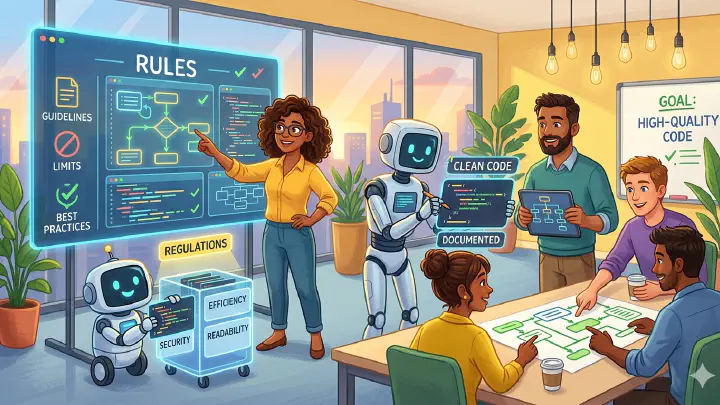
Coding agents don't need more power. They need rules.
A simple CLAUDE.md file based on Andrej Karpathy's observations about coding agents became wildly popular because it solves a real problem: AI agents are powerful, but not disciplined by default.

Stop using AI coding agents like autocomplete
AI coding agents become more useful when I stop treating them as smarter autocomplete and start treating them as delegated workers with clear inputs, boundaries, and verification.
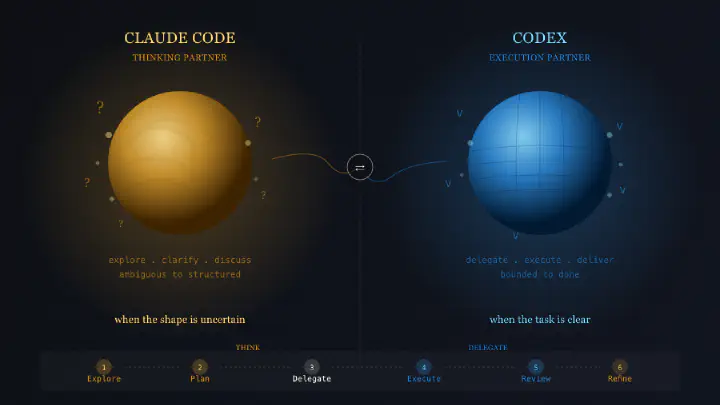
Claude Code vs Codex: two tools, two modes of thinking
I stopped asking whether Claude Code or Codex is better. The useful question is simpler: am I exploring a problem, or am I delegating a bounded task?

I Replaced CleanMyMac With a Single free/$9 Tool
Mole is an open-source macOS utility that does the job of four apps I was paying for separately — for $9 once, no subscription. Here is why I switched.

How I automated my blog deployment with GitHub Actions
How I set up a GitHub Actions workflow that automatically builds my Hugo site and deploys it via FTP — zero manual steps, zero server management.

Why I replaced WordPress with Hugo after more than 15 years
After 15 years of WordPress complexity, I ditched the backend, the plugins, and the database overhead in favor of Hugo — a static site generator that lets me write everything in Obsidian, build in under a second, and finally own my content the way I always should have.

My productivity superpower
Discovering SuperWhisper, a voice-to-text AI tool that transforms the way you capture thoughts and write content by speaking instead of typing.

How I Built an iOS App with Vibe Coding — From Blank Page to App Store
The story of using AI tools like Cursor, ChatGPT, and V0 to build and publish an iOS subscription tracker app from idea to App Store.

I Replaced these four Setapp apps on my Mac with free alternatives
After years of Setapp subscription, subscription fatigue led to replacing four paid apps with free alternatives while keeping what truly matters.

Why Notion isn't my go-to tool — the long-term problem
Notion is a very popular productivity app, versatile, powerful, and beautifully designed, but long-term reliability and control over data matter most.

How I manage projects and tasks in Obsidian, complete process and setup tour
I’ve penned an article detailing my two-year journey with Obsidian, and I’m eager to further delve into my daily interactions with this formidable tool, highlighting how I orchestrate my projects.

Stop taking notes for nothing! How to transform your jottings into actionable steps?
In today’s rapidly evolving digital landscape, we are inundated with a plethora of note-taking and knowledge-management tools.

How I use Obsidian for personal knowledge management — Insights from my 2 years experience
Today I’m excited to share my two-year adventure with Obsidian, a versatile note-taking application that has become an essential part of my daily life.

Obsidian properties : How to set up a template with dynamic dates
Following the launch of Obsidian’s new ‘properties’ feature, I embarked on a journey to optimize my notes to capitalize on this improvement.

Could Bear 2.0 be a new approach to managing my Second Brain ?
An exploration of note-taking and knowledge management apps for the modern professional As a content producer and an avid user of Obsidian, I have exp

How to create note templates for Bear 2.0 (and other note taking apps like Obsidian)
Create note templates for Bear 2.0 and Obsidian with Espanso to write faster and more consistently.
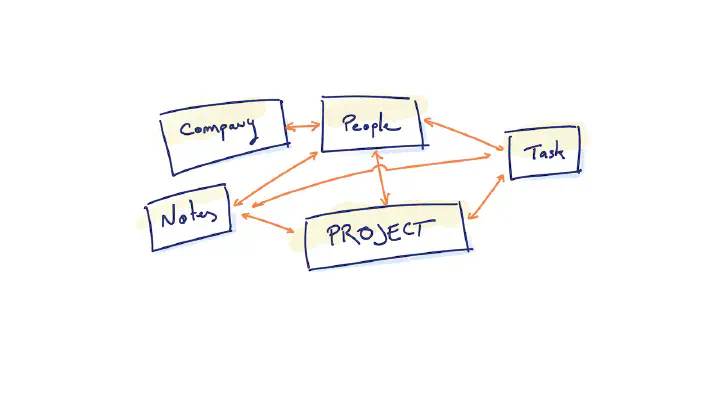
Project management with Tana, a real-world example
A real-world example of project management with Tana based on day-to-day use.

How to supercharge your writing process with AI and chatGPT
How to use AI and ChatGPT to speed up your writing process without losing clarity or structure.

Dive Into PKM With Obsidian
An introduction to personal knowledge management with Obsidian to better capture, organize, and retrieve information.

3 key benefits when using a PKM system
Three concrete benefits of a PKM system for organizing ideas, notes, and knowledge over time.

Why I choose to switch to Mastodon for microblogging
Why I chose Mastodon for microblogging and what I found there compared with other social platforms.

Is Tana the best Personal Knowledge Management and note-taking tool I’ve ever tried?
A hands-on look at Tana compared with Obsidian for PKM and note-taking.

Introduction to Regular expressions
An introduction to regular expressions to understand how they work and use them with more confidence.

Loops or recursion for the Fibonacci sequence in JavaScript
Comparing loops and recursion to explore the Fibonacci sequence in JavaScript.

Why I choose Obsidian as my PKM
Why Obsidian became my tool of choice for personal knowledge management.

How I use Make.com to automate my publication process
How I use Make.com to automate my publication workflow across multiple platforms.

My few obvious advices I wish someone had told me when I started coding
A few simple pieces of advice I wish someone had shared with me when I started coding.

How to start with currying in javascript
A simple and progressive introduction to currying in JavaScript.

Getting started with svelte components
Discover Svelte components and learn the basics to start building interfaces with confidence.

How to solve sudoku puzzles using backtracking algorithms and TypeScript
Sudoku is a logic-based puzzle game. This article walks you through how to write a sudoku solver in TypeScript using backtracking algorithms.

What are first-class and higher-order functions in javascript ?
First-class functions are functions that can be assigned to variables, passed as arguments to other functions, and returned from other functions.

5 ways to iterate an array in javascript
One of the most common tasks when working with Javascript is looping through an array. In this article, we explore 5 different ways to iterate over an array in Javascript.

How to use backtracking with javascript, and solve the n queens problem
Backtracking is a general strategy that can be used to solve many different types of problems. This article discusses how to use backtracking with JavaScript to solve the n queens problem.

Recursive functions with Javascript
Recursion is a powerful programming technique that can be used to solve problems in a more elegant way than traditional looping mechanisms.

How to Use Airtable as a Database for Your React Application, using TypeScript and custom hooks
Airtable is a versatile online database that can be used for various purposes. In this blog post, we will discuss how to use Airtable as a database for your React application.

How to set up and use environment variables in your react app
When it comes to setting up and using environment variables in a node.js backend environment, you have to install the dotenv library. But what about the front end with your react app?

Get Started with React: A (very) quick start guide to creating an app boilerplate
React is a front-end JavaScript library that has taken the web development world by storm. This quick start guide will show you how to get started with a React app.

The Benefits of Pure Functions in JavaScript
Understand pure functions in JavaScript and the benefits they bring for readability, testing, and maintenance.

Why am I using Divi for WordPress ?
Why I use Divi for WordPress and what it brings when you want to build a site quickly without coding.
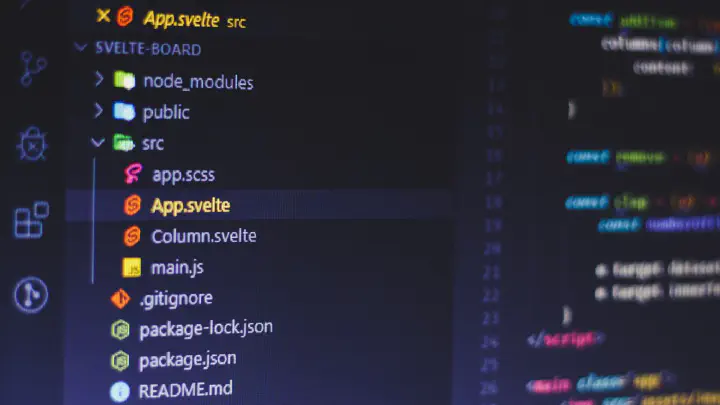
What are the greatest benefits of SvelteJS ?
Why Svelte stands out with its simplicity, performance, and refreshing developer experience.

How to set up routing in an Express.js project using TypeScript
Learn how to set up routing in an Express project with TypeScript and a few useful best practices.

8 Reasons to consider TypeScript for your next development project
Eight practical reasons to choose TypeScript for a more structured, safer, and more maintainable project.

Why I use VSCode as an IDE
Why VSCode became my IDE of choice to code efficiently every day.
How to setup a Svelte with Typescript project
Create a Svelte project with TypeScript to start from a modern, typed, and lightweight setup.

How to set up a Node.js backend using Express.js and TypeScript
Set up a clean Node.js backend with Express and TypeScript on solid, maintainable foundations.

How to create a custom React hook to fetch an API (using TypeScript)?
Create a reusable custom React hook in TypeScript to fetch API data with clearer state and typing.

How to improve the use of the console in javascript
Use the JavaScript console more effectively with simple methods that make debugging clearer and faster.

Le currying en javascript, application pratique
Application pratique du currying en JavaScript avec des exemples simples pour mieux comprendre son intérêt.

Comment éviter null et undefined avec Maybe et Result en javascript
Comment éviter null et undefined en JavaScript avec les types Maybe et Result pour rendre son code plus sûr.

3 alternatives à if & else pour améliorer la lecture du code en javascript
Trois alternatives à if/else en JavaScript pour écrire des conditions plus lisibles et plus faciles à maintenir.

javascript, pourquoi typer les variables ?
Pourquoi typer ses variables en JavaScript et quels bénéfices attendre de TypeScript au quotidien.

lodash : la petite grande librairie
Suite à une discussion avec un développeur, et sur ses conseils, je me suis penché avec beaucoup de curiosité sur la bibliothèque lodash.

Le principe du currying en javascript
Introduction au currying en JavaScript pour comprendre son principe et améliorer la composition de fonctions.