Tag
#Claude-Code

Why My Best Productivity Tools Are the Ones Nobody Else Can Use
Custom software used to be a luxury reserved for people with a budget. With AI, a tool shaped exactly like my workflow costs less than adapting to a generic one — which quietly changed what I build, what I still buy, and where the line between the two sits.

Why It's So Simple to Vibe-Code an App Today
Vibe coding promises instant apps. After shipping Lemonize and MyAbonPlus with AI, here's why real AI-assisted development looks more like product management than magic.

The Simplest Way to Save AI Tokens: Make Your Agent Talk Less
Every AI session has a token economy: prompt, context, agent work, and the answer. I break down where the tokens really go, what Caveman actually saves, and why the trick works far beyond coding agents.

How I built an Obsidian vault no single AI tool can hold hostage
CLAUDE.md, AGENTS.md, a one-page identity file, a skills folder, and a set of maps to my key notes — the whole AI layer on top of my Obsidian vault is plain markdown I own, not configuration locked inside any single tool.
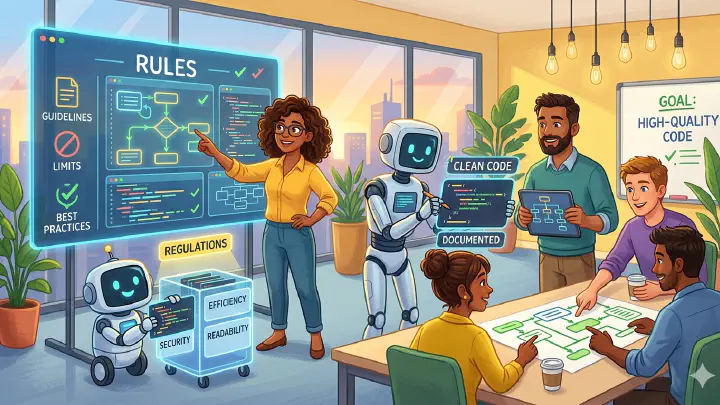
Coding agents don't need more power. They need rules.
A simple CLAUDE.md file based on Andrej Karpathy's observations about coding agents became wildly popular because it solves a real problem: AI agents are powerful, but not disciplined by default.

Stop using AI coding agents like autocomplete
AI coding agents become more useful when I stop treating them as smarter autocomplete and start treating them as delegated workers with clear inputs, boundaries, and verification.
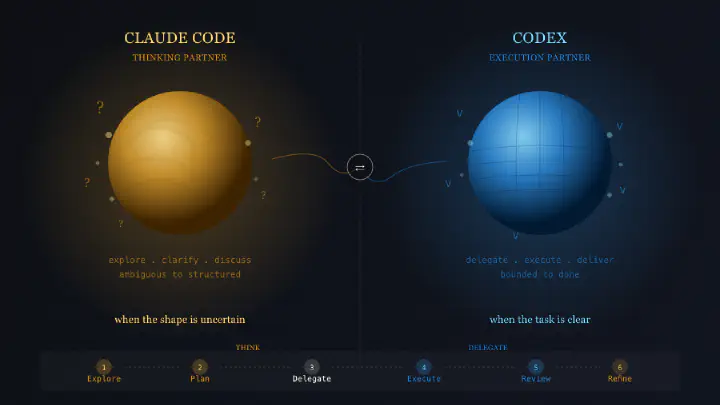
Claude Code vs Codex: two tools, two modes of thinking
I stopped asking whether Claude Code or Codex is better. The useful question is simpler: am I exploring a problem, or am I delegating a bounded task?

How I automated my blog deployment with GitHub Actions
How I set up a GitHub Actions workflow that automatically builds my Hugo site and deploys it via FTP — zero manual steps, zero server management.